Specify the conditions before the appearance
A handrail in a dry interior, a coastal balcony and a screen beside a swimming pool do not share the same exposure. Moisture, salts, cleaning chemicals, abrasion and direct handling all influence the finish strategy. Begin with those conditions, then decide how much change in appearance is acceptable. A surface intended to age is a different brief from one expected to remain visually uniform.
Identify the substrate accurately. Mild steel, stainless steel, aluminium, brass and bronze are not interchangeable canvases for the same treatment. Their fabrication methods, thermal behaviour and compatibility with other materials differ. “Bronze finish” may describe a colour applied to another metal rather than a bronze component. State whether the intention concerns the underlying material, a coating or a chemical patina.
ISO 12944 provides a framework for corrosion protection of steel structures by protective paint systems, including environmental considerations. It does not turn a colour reference into a complete coating specification. The required preparation, layers, application conditions and inspection approach still need to be selected for the actual work.
Compare the whole treatment
Different routes, different obligations
This table is a design discussion aid, not a service-life prediction or product recommendation. Performance depends on the specified system, workmanship and environment.
| Approach | What it offers | What to resolve | Useful sample |
|---|---|---|---|
| Powder-coated steel | Controlled colour, texture and gloss options. | Pretreatment, corrosion protection, edge coverage and repair method. | A welded corner with an edge and fixing recess. |
| Hot-dip galvanized steel | A zinc coating used for corrosion protection. | Venting, drainage, distortion risk and acceptable surface character. | A representative fabricated section, not only flat sheet. |
| Brushed stainless steel | A directional metallic surface without an opaque colour coat. | Grade, exposure, weld treatment, contamination control and grain direction. | A corner including a finished weld. |
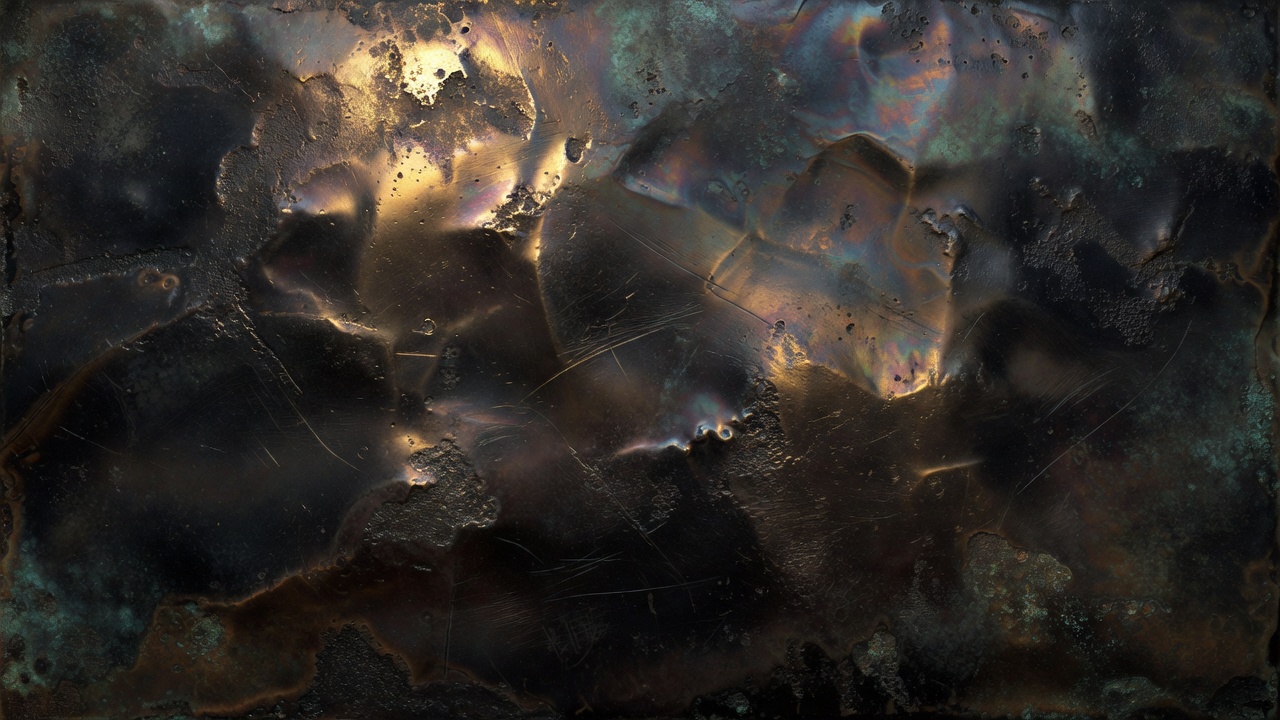
| Patinated brass or bronze | Tonal depth and a surface that can evolve with touch and exposure. | Alloy, patination process, sealing, variation and maintenance. | A handling sample showing an agreed range of tones. |
Preparation is part of the appearance
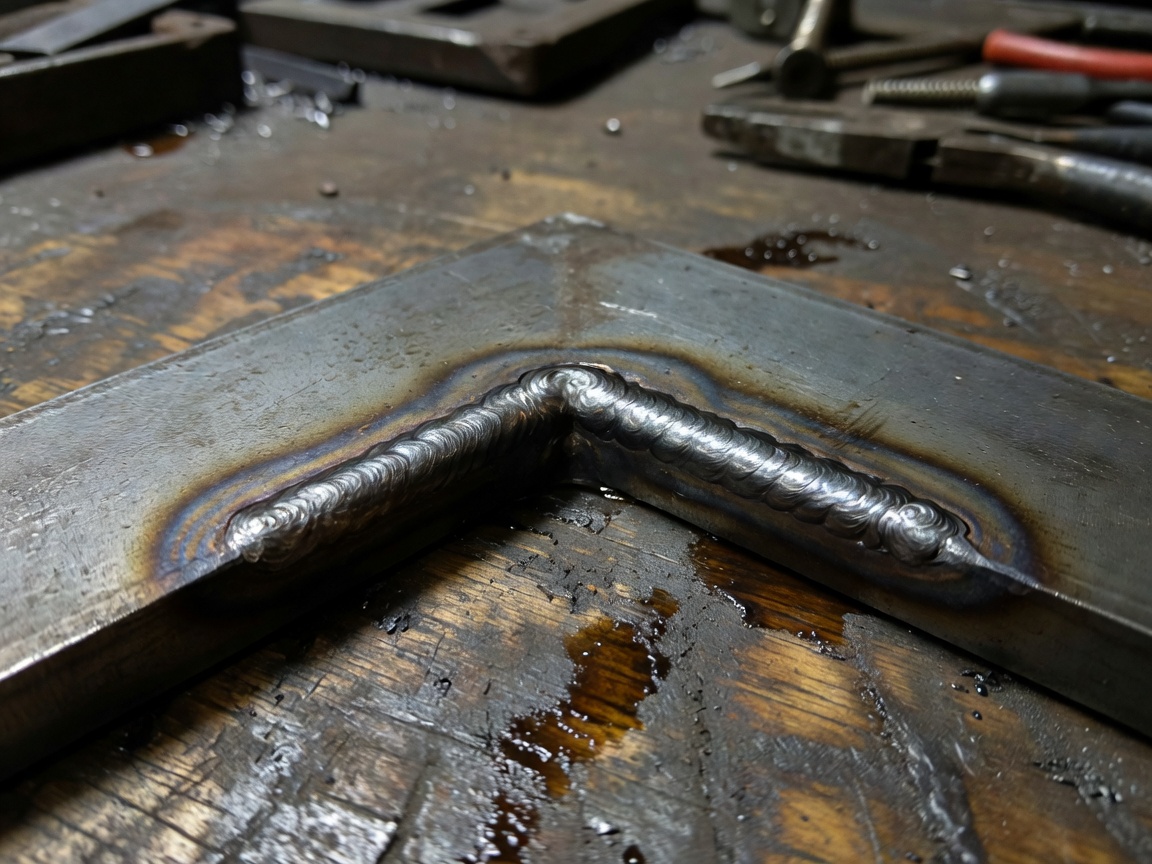
Coatings do not erase every fabrication mark. Grinding patterns, weld contours, sharp edges and surface defects can remain visible or affect coverage. Excessive grinding may also change the intended geometry. Agree the required appearance before finishing, including which faces are prominent and how much variation is acceptable at a joint.
Hot-dip galvanizing brings fabrication-specific requirements because components enter a process that must safely fill and drain. BS EN ISO 1461 concerns hot-dip galvanized coatings on fabricated iron and steel articles; it is not a promise that every component will emerge with identical cosmetic texture. Consult the galvanizer during detailing, particularly for hollow sections and assemblies sensitive to distortion.
For stainless steel, specify the grade and finish separately. A brushed appearance does not identify corrosion resistance. Keep fabrication contamination and post-weld treatment in the conversation, and establish cleaning instructions suitable for the actual environment. The British Stainless Steel Association offers specialist information that can help frame questions for the project team.
Make the sample representative
A small flat coupon is useful for an initial colour discussion but cannot show how the treatment behaves at a weld, a recess or a cut edge. Request a sample with a representative junction and review it under the intended lighting. Directional finishes should be assessed in their proposed orientation. Gloss and texture can change the reading of the same nominal colour.
RAL colour references are widely used to communicate colour, but a RAL designation alone does not define resin chemistry, texture, gloss, substrate or durability. Record the manufacturer’s system reference and the approved sample alongside the colour. If adjacent components come from different workshops or batches, discuss how consistency will be assessed before production begins.
Patination needs a range rather than an impossible promise of absolute uniformity. Agree whether handling marks are welcome, whether a wax or lacquer is intended and what maintenance can realistically be provided. Richard Serra’s weathering-steel sculpture The Matter of Time at the Guggenheim Museum Bilbao illustrates how material character can be central to an experience; it is not evidence that weathering steel suits every sheltered or frequently touched architectural location.
Plan for damage and care
Ask how the finish will be protected during transport, installation and adjacent construction. A protective film that remains too long or an incompatible tape can introduce problems of its own. Establish who removes protection, who inspects the result and what counts as an acceptable repair. Site touch-up may not match a factory-applied surface in texture or sheen.
The handover should identify cleaning methods, prohibited products, inspection needs and the route for ordering replacement parts or treatment advice. Premium metalwork is not defined by an absence of maintenance. It is defined partly by whether the design makes sensible care possible, and whether the surface’s future has been discussed as carefully as its first appearance.
Continue to trade coordination